The Know How You Need & the Tools to Get You There... Get Certified >

Under the Hood:
What Acumen Really Tells Us About How We Think, Decide & Lead


Suzie Price takes listeners “under the hood” of TriMetrix to explore how Acumen reveals the clarity behind the way we understand people, handle reality, navigate systems, see ourselves, understand our roles and envision our future—and why that matters for better decisions, stronger leadership and meaningful development.
TOP 3 TAKEAWAYS
- 1. Behavior is not capability.
DISC helps us understand how someone naturally communicates and behaves, but it does not tell us everything they are capable of doing. A quiet, understated person may have tremendous clarity and judgment under the hood, while someone who appears confident and experienced may have areas that require more effort.
Same driving style does not mean the same horsepower.
- 2. The Acumen graph gives us places to look—not conclusions to make.
Acumen can show where someone has strong clarity, where there may be fuzziness and where they may be leaning toward or away from something. But the assessment does not tell us why.
As Suzie says:
“The graph doesn't tell me why. You do.”
Used well, Acumen should make us more curious, not more certain.
- 3. Development starts with awareness—but it doesn't end there.
Acumen is not a verdict. It is a snapshot, and many of the dimensions and personal skills it measures can develop.
Meaningful change requires:
Awareness + Willingness + Tools
The real development happens when someone recognizes an old pattern in a real-life moment and makes a different choice—then practices that choice again and again.
KEY QUOTES
- “Not all the answers. Better questions.”
- “Behavior is not capability.”
- “Caring about people is not always the same thing as clearly understanding people.”
- “The graph doesn't tell me why. You do.”
- “Same driving style, different fuel, different engine.”
- “Resume is not horsepower.”
- “Experience doesn't automatically create clarity, and clarity doesn't automatically create experience.”
- “Sometimes development is not about adding capability. Sometimes it's just about trusting and using the capability that is already there.”
- “Hiring: we assess, investigate, compare and manage risk. Coaching: we explore, understand, support and develop.”
- “The assessment itself isn't the development.”
- “Acumen should make us more curious, not more certain.”
- “Acumen is not a verdict. It's a snapshot.”
- “We need to be more curious than decisive. Not indecisive—curious.”
PRACTICAL APPLICATION
The next time you find yourself making a quick judgment about someone—They lack confidence. They aren't decisive. They're too focused on people. They don't have enough experience. They should know this by now.—pause.
Ask:
- · What am I seeing on the outside?
- · What might be happening underneath it?
- · Am I confusing behavior with capability?
- · Am I confusing experience with horsepower?
- · Is this a skill or training issue rather than an Acumen issue?
- · Is the person in an environment that fits what motivates them?
- · What question could I ask before deciding what the problem is?
If you're using an Acumen assessment in coaching, remember:
The graph gives you a place to look. The person gives you the story.
And if you're looking at your own results, consider three questions:
What do I see clearly?
Where might there be some fuzziness?
What could I develop that would make life or work easier and more effective?
ABOUT THE HOST
Suzie Price is the founder of Priceless Professional Development and host of the Wake Up Eager Podcast. For more than 20 years, she has helped leaders and organizations use TriMetrix and other assessment tools throughout the employee lifecycle—from hiring and onboarding to coaching, development and leadership—so they can make better people decisions and build high-commitment, low-drama workplaces.
EPISODE RESOURCES:
TriMetrix®
The tri-modal assessment discussed throughout the episode, combining behavioral style, motivators and Acumen.
Resource: TTI Success Insights
https://www.ttisi.com/assessments/disc/
The behavioral component Suzie describes as “how you like to drive”—natural behavioral and communication style.
Resource: TTI Success Insights
Official Hartman Institute overview of the HVP and how it measures patterns of valuation, worldview and self-view.
https://www.hartmaninstitute.org/axiology-101/the-hartman-value-profile-hvp
Fundamentals of Axiology
Free introductory educational material from the Robert S. Hartman Institute.
https://www.hartmaninstitute.org/axiology-101
Acumen Dimensional Balance Page
The TriMetrix report page Suzie references when discussing the six dimensions, clarity/color and bias.
Included within applicable TriMetrix Acumen reporting.SPARK™ Job Kits
Priceless Professional Development's practical job-fit tools referenced in the hiring/coaching discussion.Learning Bites / TriMetrix University
Practical development workbooks, exercises and coaching tools Suzie references for developing areas such as decision-making and self-direction.Acumen in Action Resources
Companion resources and upcoming mini episodes associated with Episode 157.
PricelessProfessional.com/AcumenInActionUpcoming Acumen in Action Mini Episodes
Caring About People vs. Understanding People
Can You See a Future?
Same Style, Different Horsepower
EPISODE RESOURCES:
Connect with Suzie Price:
- LinkedIn: Suzie Price Priceless Professional Development Wake Up Eager Podcast
- Learn how TriMetrix helps you understand how you’re wired as a leader: www.pricelessprofessional.com/whatistrimetrix
- Already have a TriMetrix assessment? Access your debrief tools here: www.pricelessprofessional.com/myassessment
Podcast:
Newsletter:

Episode Topics
About Priceless Professional Development
We help you use the science in the TriMetrix Assessment to reduce drama and build an energetic, committed wake up eager workforce.
Our work helps reduce turnover and improve your productivity.

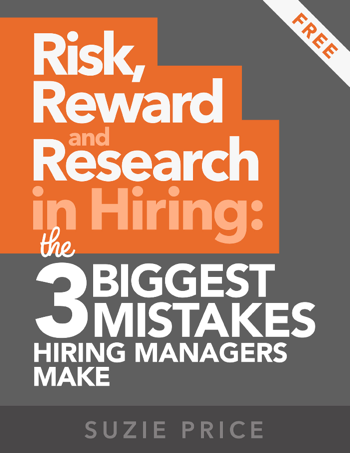
Have you ever hired the wrong person and lived to
regret it?
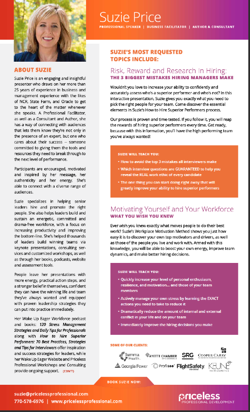
Sign up for our monthly newsletter and you'll get this FREE GUIDE, "Risk, Reward and Research in Hiring" on the three biggest mistakes interviewers make.
Don’t miss our newsletters, blogs or podcasts...