The Know How You Need & the Tools to Get You There... Get Certified >

Measure Sales and Leadership Qualities With 360 Feedback by Avoiding The Top 13 Mistakes

A powerful way to measure sales and leadership qualities is with 360 degree feedback. It can help employees see where they're strong, where there are gaps and exactly how to make changes that will make an immediate performance difference.
What is 360 Degree Feedback?
It is a personal and professional development process that
involves getting anonymous feedback about specific sales and
leadership traits
and competencies from people who observe
the Subject's behaviors at work on a
regular basis.
Raters can include: direct reports, peers, managers and/or customers.
Results help measure sales and leadership qualities, and are used to help an employee leverage their strength's and close gaps.
Team members need a positive and constructive way to say what they think. Employees are hungry for feedback, and need honest and specific insight into what's working and what's not working regularly to make timely adjustments.
360 Degree Feedback meets both of those needs. With the results of a 360 Feedback report employees get honest feedback that can be used as a catalyst for inspiration and high performance.
360 degree feedback and similar team development surveys are great
tools for measuring team, sales and leadership qualities, and for fast and effective
improvement. But surveys only work well IF each is handled right! It only works if you avoid these top thirteen mistakes:
The Top 13 Mistakes
People Make When Using 360 Feedback
Here's the top 13 mistakes that companies make that can erase the good effects of feedback surveys. Avoid these and increase your ability to effectively
measure and build sales leadership qualities.

- MISTAKE #1: Subjects and raters do not receive enough communication up front.
WHY THIS MATTERS & HOW TO FIX IT: All involved MUST understand WHY you're
doing 360 feedback and HOW the information will be used. - MISTAKE #2: 360 feedback results are considered when determining raises and promotions and are used in place of or with performance appraisals.
WHY THIS MATTERS & HOW TO FIX IT: Results should be used for development
purposes only. Tying results to pay kills the ability to get honest feedback and
creates all sorts of mis-trust and angst. Don't let this big error sink you! - MISTAKE #3: Subjects and Raters do not receive instructions on how to give positive and helpful feedback.
WHY THIS MATTERS & HOW TO FIX IT: Instructions should be provided verbally
and in writing and are as simple as these four statements: 'Do not rate higher or lower than deserved. When writing comments, describe both positive and constructive aspects. The best comments are very specific and include examples. Avoid emotional comments, whether positive or constructive.' - MISTAKE #4: Not using a secure online system to ensure anonymity of raters.
WHY THIS MATTERS & HOW TO FIX IT: If raters do not feel assured that the
feedback they offer is confidential, they'll not share their true perspective. If
this happens, Survey Subjects miss an opportunity to address any 'festering' issues. Use a secure software system. - MISTAKE #5: The survey you're using is 'canned' (off-the-shelf) and not tailored to your company's needs.
WHY THIS MATTERS & HOW TO FIX IT: If the items being measured are not
specifically important to your team and company now, the feedback's not
pertinent and probably will not be acted upon. Use a survey you can tailor.
- MISTAKE #6: The selected Raters do not interact with and observe the Survey Subject in action at work on a regular basis.
WHY THIS MATTERS & HOW TO FIX IT: This will create feedback on a Subject's sales and leadership qualities 'light' potentially inaccurate, and overall not very helpful. - MISTAKE #7: You have less than three Raters for each category, for example only two peers or only two direct reports.
WHY THIS MATTERS & HOW TO FIX IT:: This makes your ability to assure confidentiality an issue. Have three or more raters in each relationship area as often as possible. - MISTAKE #8: You have too many items for people to rate on the survey.
WHY THIS MATTERS & HOW TO FIX IT: More than 40 items and your Raters get
fatigued. This causes the quality of the feedback to decline dramatically. - MISTAKE #9 The survey does not provide specific and actionable development
recommendations for lowest scoring areas.
WHY THIS MATTERS & HOW TO FIX IT: We all need help getting better at something we score low on. If we knew how to excel at all sales and leadership qualities we'd not need development suggestions and recommendations. Make sure you get and give specific and actionable development recommendations to all Subjects of 360 feedback. - MISTAKE #10: Subjects only focus on their weaknesses and they leave the process and review session discouraged and feeling threatened.
WHY THIS MATTERS & HOW TO FIX IT: All development plans should include a strong focus on leveraging strengths and on closing on development gap at a time. I recommend a ratio of 3 to 1. Three strengths leveraged for every one gap closed. This process, when done right, is encouraging and helpful. Subjects feel sure and more confident about what they offer and they now have insight into how they can specifically improve.
- MISTAKE #11: Subjects are allowed to pick more than two development areas to focus on at a time.
WHY THIS MATTERS & HOW TO FIX IT: People can only SUCCESSFULLY change one thing at a time. Have each Survey Subject pick one or two high impact development areas that they can focus on and 'attack' for improvement. - MISTAKE #12: Survey Subjects do not report back to the people who gave feedback (Raters) with a summary of the survey results and their action plan.
WHY THIS MATTERS & HOW TO FIX IT: Raters hate it when they take time to give
feedback and don't hear back from the Subject. This breeds resentment and causes the Survey Subject's Raters to judge the Subject more harshly in the future. - MISTAKE #13: There's no follow up with the Subjects who were surveyed.
WHY THIS MATTERS & HOW TO FIX IT: If there's no development discussions and no
benchmarking process to see improvement the 360 Feedback project becomes just another 'flavor of the month' exercise. Follow up is crucial. Many 360 tools provide the ability to re-asses in 12 to 18 months, comparing the new scores to previous scores. This helps the 360 Feedback Subject stay focused, and accountable to, ongoing improvement.
Need 360 Feedback Assistance? If you are starting or considering a 360 feedback project, consider 20/20 Insight software SYSTEM that makes it possible for you to easily measure the performance of a person, a team, or the entire organization with customized surveys and done-for-you-survey-templates: Survey Software System
If you would like to discuss your project in a complimentary consulting call or if you think you need survey administration and facilitation assistance, contact Suzie Price.
LET'S TALK:
Contact us to schedule a Complimentary Consulting Call
or to ask questions about any of our Hiring,
Coaching, Training and Assessment services.
About Priceless Professional Development
We help you use assessment science to reduce drama and build an energetic, committed wake up eager workforce.
Our work helps reduce turnover and improve your productivity.


Have you ever hired the wrong person and lived to regret it?
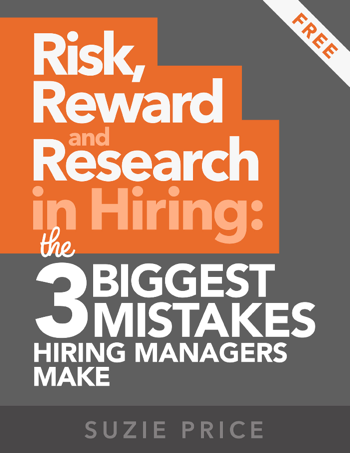
Sign up for our monthly newsletter and you'll get this FREE GUIDE, "Risk, Reward and Research in Hiring" on the three biggest mistakes interviewers make.
Don’t miss our newsletters, blogs or podcasts...